
Water that remains on a flat roof after rain needs a drainage assessment before you choose a coating. The roofer needs to establish why it collects there, examine the existing roof, and determine whether the proposed system suits those conditions.
You may need a drain cleared, an outlet repaired, or a more involved correction to a low area. Those jobs differ from applying a coating, and you should be able to find each recommended task in the proposal.
Note how long the water stays
A photo during rain tells the inspector less about drainage than a series showing the same area after rain stops. Include dates, the approximate time the rain ended, and the location of any interior leak. Leave wet-roof access to qualified personnel; use photos you already have or can take from a safe location.
GAF’s ponding-water bulletin defines ponding as water that has not drained or dissipated within 48 hours after precipitation ends. Report an active leak as soon as you notice it, regardless of that definition.
Tell the inspector if the wet area also appears in dry weather or beside operating equipment. An equipment leak or discharge may need attention from the service contractor as well as the roofer.
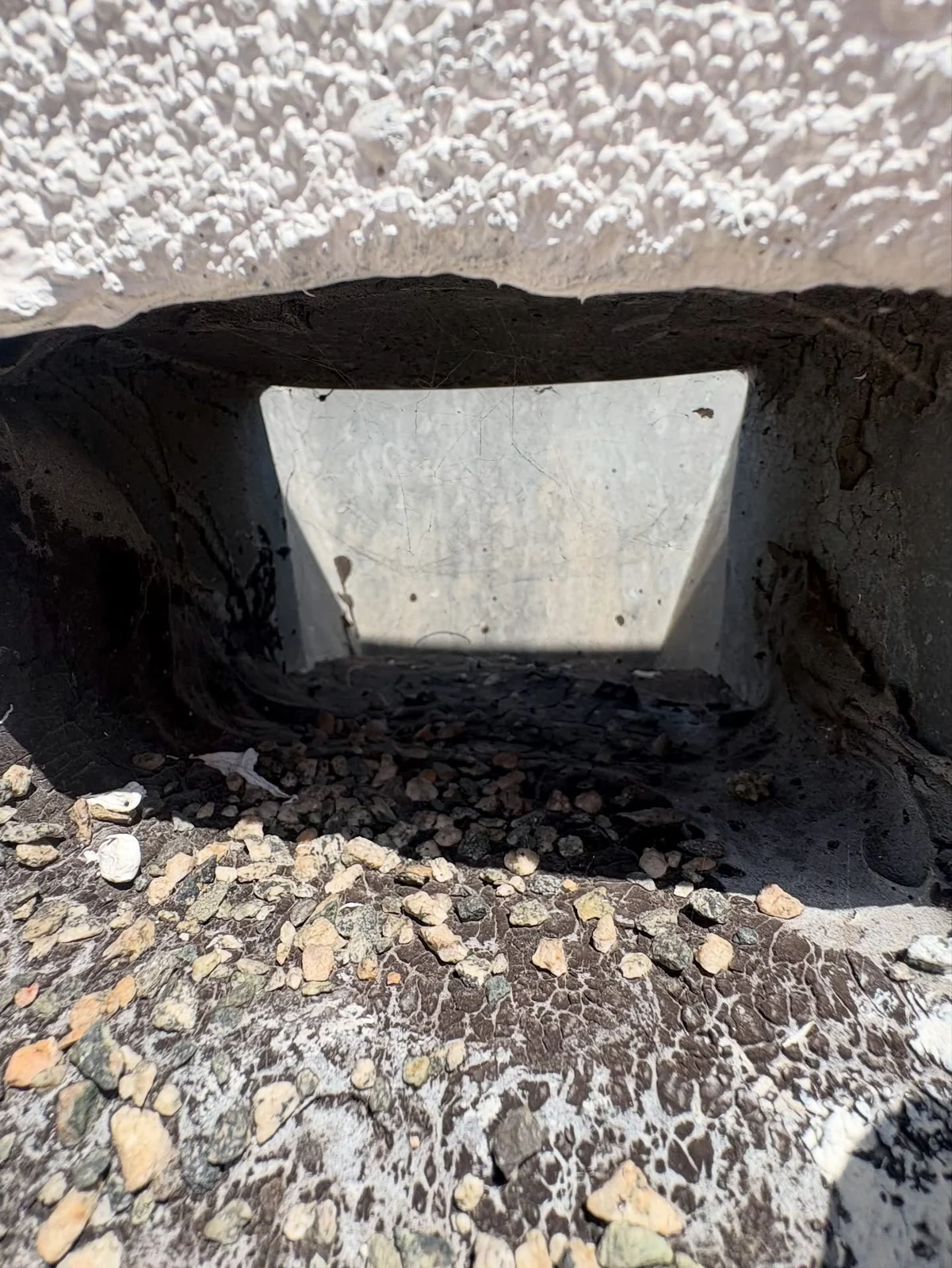
Trace the route to the drain
IKO’s guidance on flat-roof ponding lists possible contributors such as obstructions, uneven slope, compressed insulation, structural movement, and HVAC-related water. The contractor needs to examine the roof to distinguish among them.
| Part of the inspection | Details to establish | Possible work to discuss |
|---|---|---|
| Drains, scuppers, and gutters | Debris, restrictions, outlet damage, and the accessible downstream route. | Clearing an obstruction or repairing the outlet. |
| Flow toward the outlet | The low area, nearby roof features, and intended flow direction on a marked photo or sketch. | Correcting a low area or reviewing the drainage layout, even if the outlet is open. |
| Membrane and underlying materials | The condition of the roof assembly and any need for further investigation. | Repairing or removing damaged materials before surface treatment. |
| Rooftop equipment | Any discharge or leak supplying water to the area. | Equipment service coordinated with roof work. |
Structural movement or a broader drainage-design problem may require another specialist. Establish who will assess it before choosing a repair.
Choose the coating for the roof’s conditions
Once the contractor has explained the drainage work, review the proposed coating by product name. You need the specification for your existing roof surface and expected water exposure, along with the proposed warranty terms.
For example, GAF’s bulletin allows specified Unisil or High Solids Silicone applications over eligible GAF acrylic coatings in ponding areas, subject to its installation and coverage conditions. That permission applies to the named products and assemblies. The word “silicone” alone tells you too little to judge whether a proposal meets the requirements for your roof.
Have the contractor show where the proposal covers low areas or outlet alterations, if needed, and how they plan to review drainage after completing the work.
Investigate wet materials beneath the surface
An inspector cannot determine the condition of underlying insulation from a dry surface alone. GAF’s Liquid-Applied Roofing Manual, substrate preparation section, calls for removing wet roof insulation before coating and discusses moisture surveys to assess the assembly.
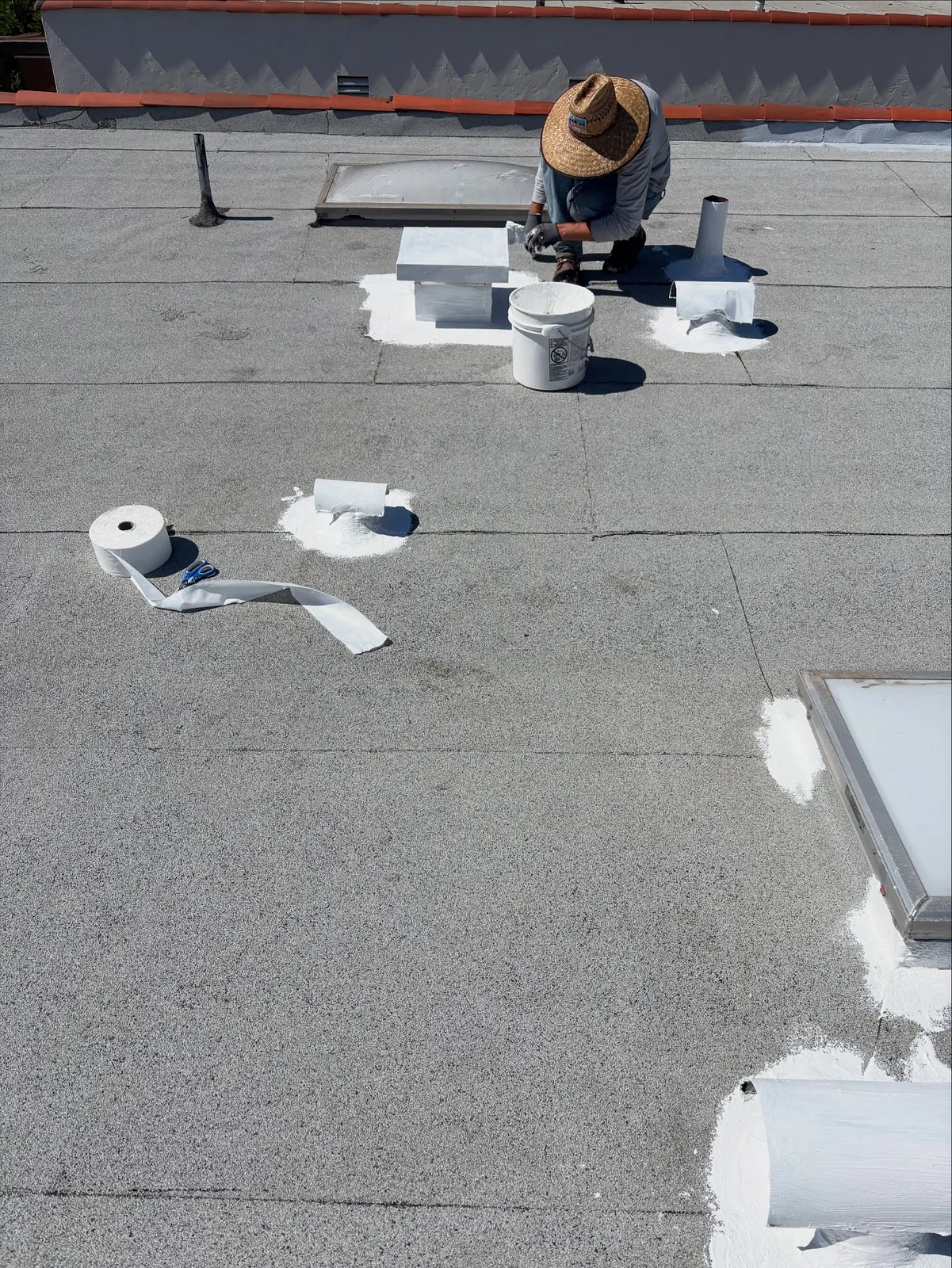
Before approving restoration, find out how the contractor assessed the existing roof, which areas need removal or repair, and what findings would change the recommendation. A general “prepare roof” line leaves those details unresolved. The proposal should identify any flat roof repairs needed before coating.
Review the whole job before approving it
Compare proposals against the water problem you first reported. Each contractor should explain:
- The suspected cause, with a marked photo or roof sketch and any unanswered questions.
- Drainage work included in the price, from clearing outlets to proposed changes in roof geometry.
- Repairs to the existing roof and the basis for recommending the coating system.
- Work outside the price, such as further investigation, hidden damage, equipment service, or specialist design.
- Completion photos and a follow-up appropriate to the original drainage concern.
For an HOA property, save the assessment with the approved proposal so a later board can follow the decision. A roof inspection and written report can document the findings before you commit to the work.
Contact Golem Roofing to discuss drainage repairs or silicone restoration. Include the property address, roof history, and available photos showing where water collects and how long it remains.
Related Roofing Services
Move from this article into the right service path without losing the context behind your roofing decision.
Residential roofing
Installation and replacement paths for shingle, tile, concrete tile, and metal roofs.
Repair and maintenance
Inspection, leak repair, maintenance, and repair planning when the roof still has useful life.
Commercial and HOA
Commercial replacement, HOA planning, TPO systems, and silicone roof coating options.
Planning and proof
Start with the right service path, then review certifications, projects, and customer proof.
Service Areas
Golem Roofing serves Long Beach, the South Bay, Palos Verdes, and nearby Los Angeles County communities.
More Roofing Guides
Related articles selected from the same roofing topic cluster.
- Silicone Roof Coating Adhesion: The Test Before the Topcoat
- Silicone Roof Maintenance: What to Check After Restoration
- Before an HOA Roof Project Starts: Access, Notices, and Daily Handover
- Flat Roof Restoration Done Right: Repairs, Reinforcement & Silicone Coating
- Apartment Building Roof Restoration: From 8 Tons of Gravel to a Complete System
- Long Beach Flat Roof Restoration: A Complete Silicone Roofing System