
After a silicone restoration, plan for regular roof inspections and the next visit from an HVAC technician or equipment contractor. The roofer needs to look for drainage problems, damage to the coating, and disturbed flashing. Anyone working on rooftop equipment needs to know how to protect the roof and report damage.
Start with the documents for the system the contractor installed. Keep the product information, care instructions, applicable warranty, and completion photos where the person managing the property can find them.
Have the roofer examine drains, coating, and flashing
GAF’s building-owner maintenance guidance identifies debris, water, clogged drains, and loose flashing as concerns for roof inspections. Its Liquid-Applied Roofing Manual, pages 92–93, also addresses coating damage and problems after equipment work.
During an inspection, the roofer can assess these conditions and recommend the work needed:
| Finding | Follow-up to arrange |
|---|---|
| Debris at a drain or scupper | Have qualified personnel clear it using methods suitable for the roof. If water remains or the blockage recurs, have the roofer examine the drainage. |
| Cut, puncture, or worn traffic area | Note the location and have the roofing contractor assess the damage and select a compatible repair. |
| Loose or lifting coating | Have the roofer examine the affected area and underlying condition before approving a patch or recoat. |
| Disturbed flashing or a penetration detail after equipment work | Arrange for the roofer to inspect the detail and coordinate any correction with the equipment contractor. |
Keep photos and the repair date with the finding. If the roofer recommends more investigation or a later visit, note who will arrange it. Leave inspections of a wet roof to qualified personnel.
Plan the next equipment visit
Before an HVAC, solar, or maintenance contractor starts, identify the equipment and work area with them. Tell them the roof has a coating system and share the care instructions that apply to their work. Coordinate roof protection and any proposed new attachment or penetration with the roofing contractor. Establish who can approve alterations to the roof.
At the end of the visit, have the service contractor report spills, dropped items, moved supports, or roof details they disturbed. If the work could have affected the surface or flashing, arrange for the roofer to inspect it. GAF’s Liquid-Applied Roofing Manual recommends checks after rooftop-equipment work and a roof-access log.
Have the roofer confirm compatible materials before anyone applies a general-purpose sealant to the coating. For a planned alteration, review the installed system’s warranty for notification and approval provisions before authorizing the work.
Put inspections on the property calendar
Agree with the roofing contractor on the inspection schedule and who will receive the findings. GAF’s manual recommends semiannual inspections, plus checks after severe weather or work that could damage the roof. That guidance covers the systems in the manual; use your installed system’s documents and issued warranty to establish the requirements for your property.
Keep the plan with the installation documents and current roofing contact. Resolve missing product or warranty information with the installing contractor. An old estimate may list a different product from the one the contractor installed.
Choose the cleaning or repair the roof needs
For cleaning, have the contractor confirm methods and cleaners suitable for the installed coating and its condition. A pressure-washing routine used on another roof may be unsuitable for yours.
For a repair, get the location, recommended materials, and reason for the work in writing. For a proposed recoat, request a current roof assessment and a proposal for the specific system. The roof’s age alone gives you too little information to decide whether it needs another coat.
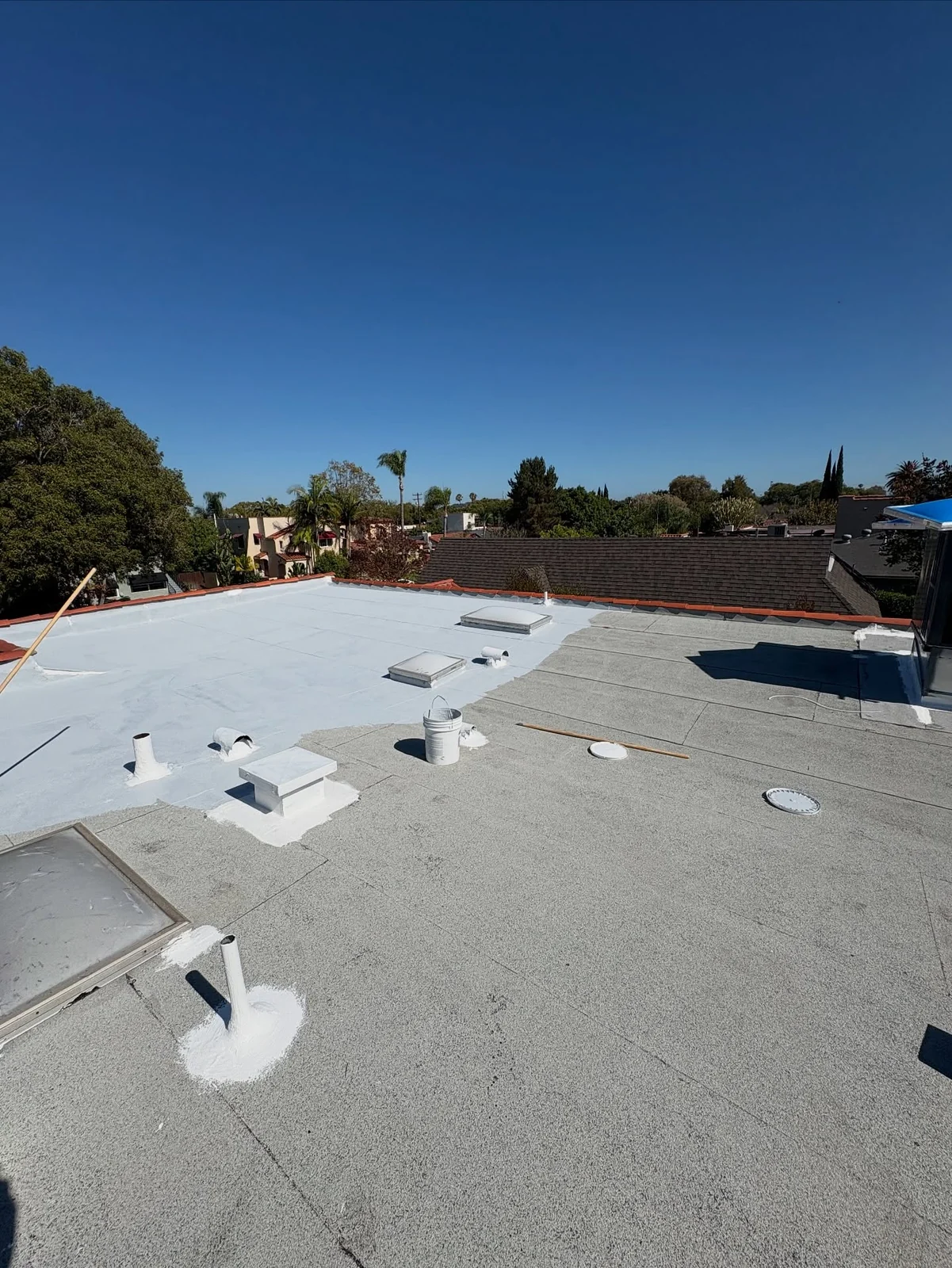
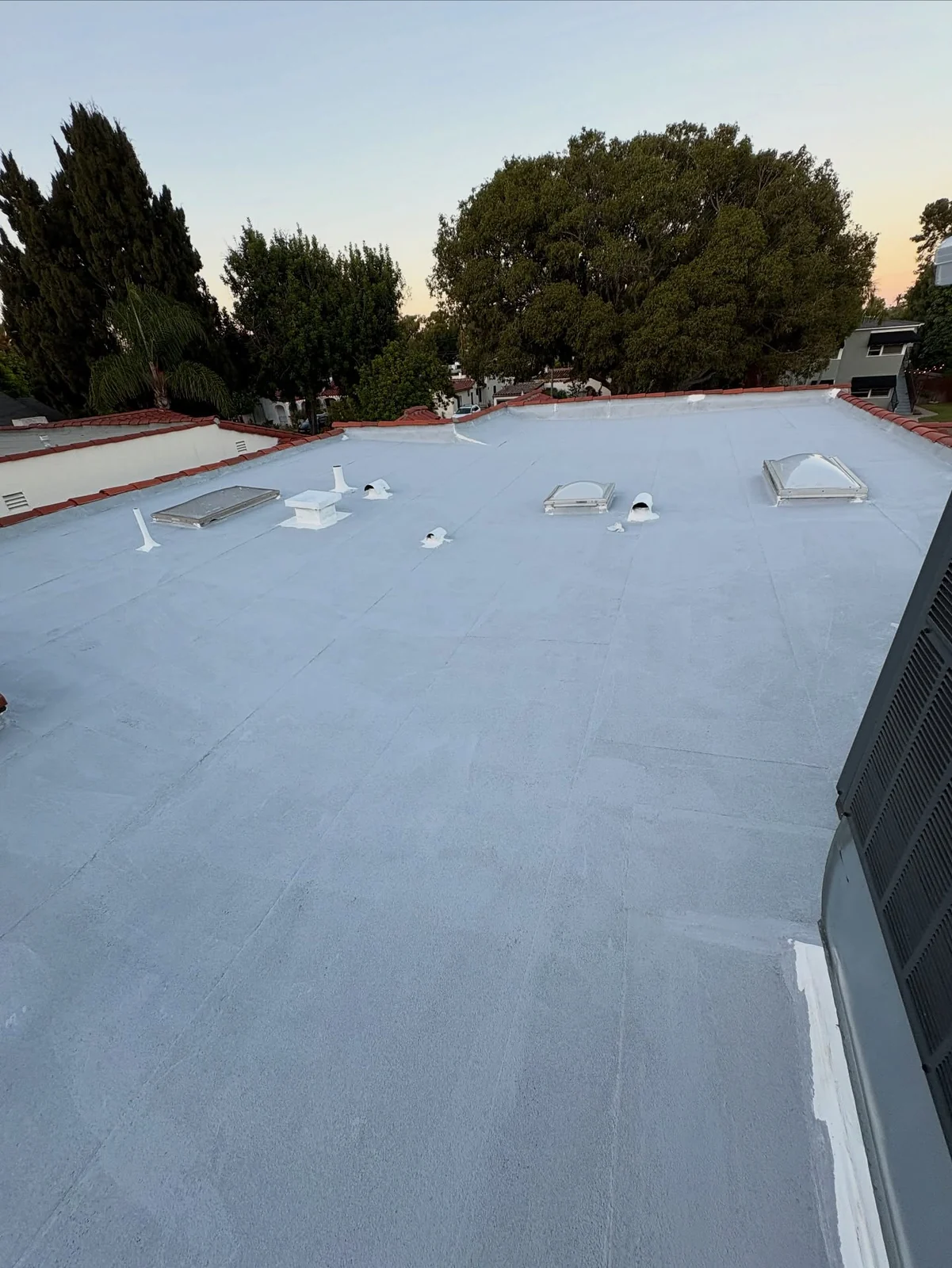
Golem Roofing’s Long Beach silicone-restoration project shows the cleaning and detail work that preceded the finished coating, including areas around skylights and vents.
Keep a short roof-service history
Use the same names for roof areas and equipment on service tickets, photos, and inspection reports. Log the date, company, work area, any concern, and the person following up. Add the repair or inspection result when the work finishes so a future manager can see what happened.
An entry such as “water beside unit AC-2 after service visit” gives the inspector a place and time to investigate. It leaves the cause for the inspector to determine.
Report an active leak or possible damage to the roofing contact as soon as you notice it. Include the building, roof or interior location, timing, recent rooftop work, and available photos. You can fill gaps in the service history after reporting the problem.
To arrange care for a restored roof, contact Golem Roofing with the installation information and any planned equipment work. A roof inspection and written report can identify current concerns and the next maintenance actions.
Related Roofing Services
Move from this article into the right service path without losing the context behind your roofing decision.
Residential roofing
Installation and replacement paths for shingle, tile, concrete tile, and metal roofs.
Repair and maintenance
Inspection, leak repair, maintenance, and repair planning when the roof still has useful life.
Commercial and HOA
Commercial replacement, HOA planning, TPO systems, and silicone roof coating options.
Planning and proof
Start with the right service path, then review certifications, projects, and customer proof.
Service Areas
Golem Roofing serves Long Beach, the South Bay, Palos Verdes, and nearby Los Angeles County communities.
More Roofing Guides
Related articles selected from the same roofing topic cluster.
- Long Beach Flat Roof Restoration: A Complete Silicone Roofing System
- Roofing Warranty Checklist: 7 Questions Long Beach Property Owners Should Ask
- Apartment Building Rock Roof Restoration in Long Beach, CA: 8 Tons of Gravel Removed and a 20-Year ASC Warranty
- 13,000 SF HOA Roof Restoration in Signal Hill, CA: Silicone System, 20-Year Warranty & Third-Party Protection
- Flat Roof Restoration in Long Beach, CA: Silicone Coating, Cost Savings & Warranty Protection
- Silicone Roof Restoration for HOA and Commercial Properties in Long Beach, LA & Orange County