
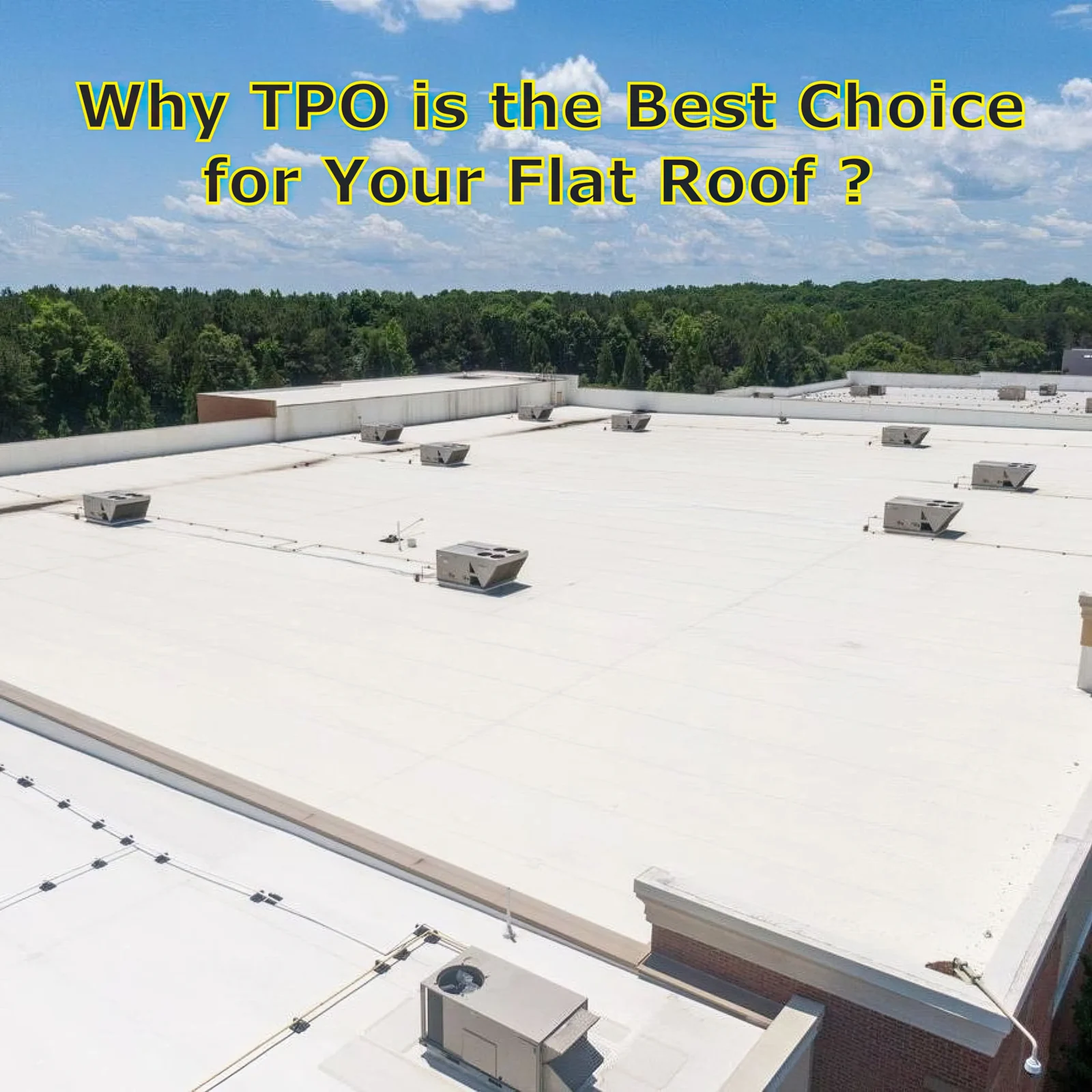
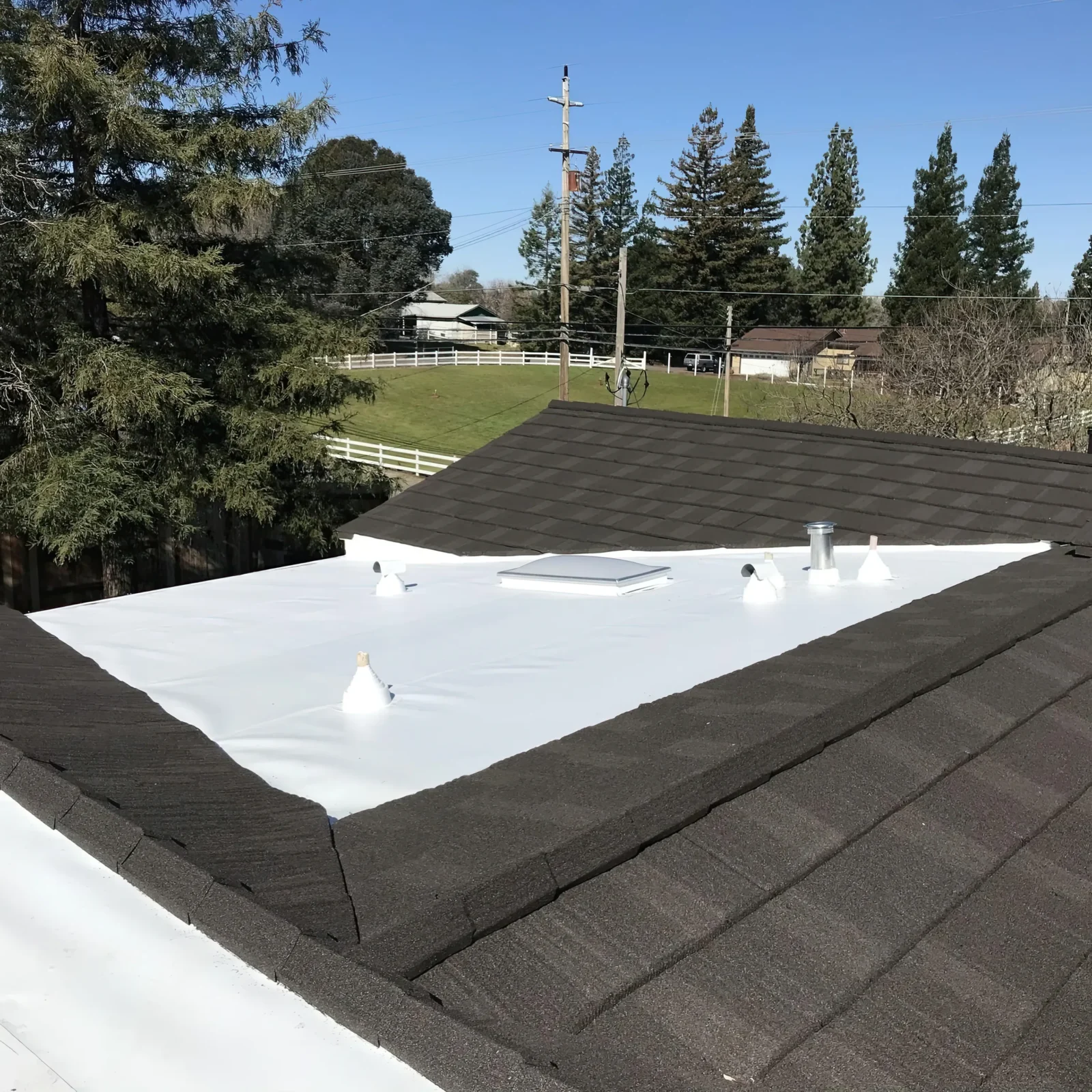
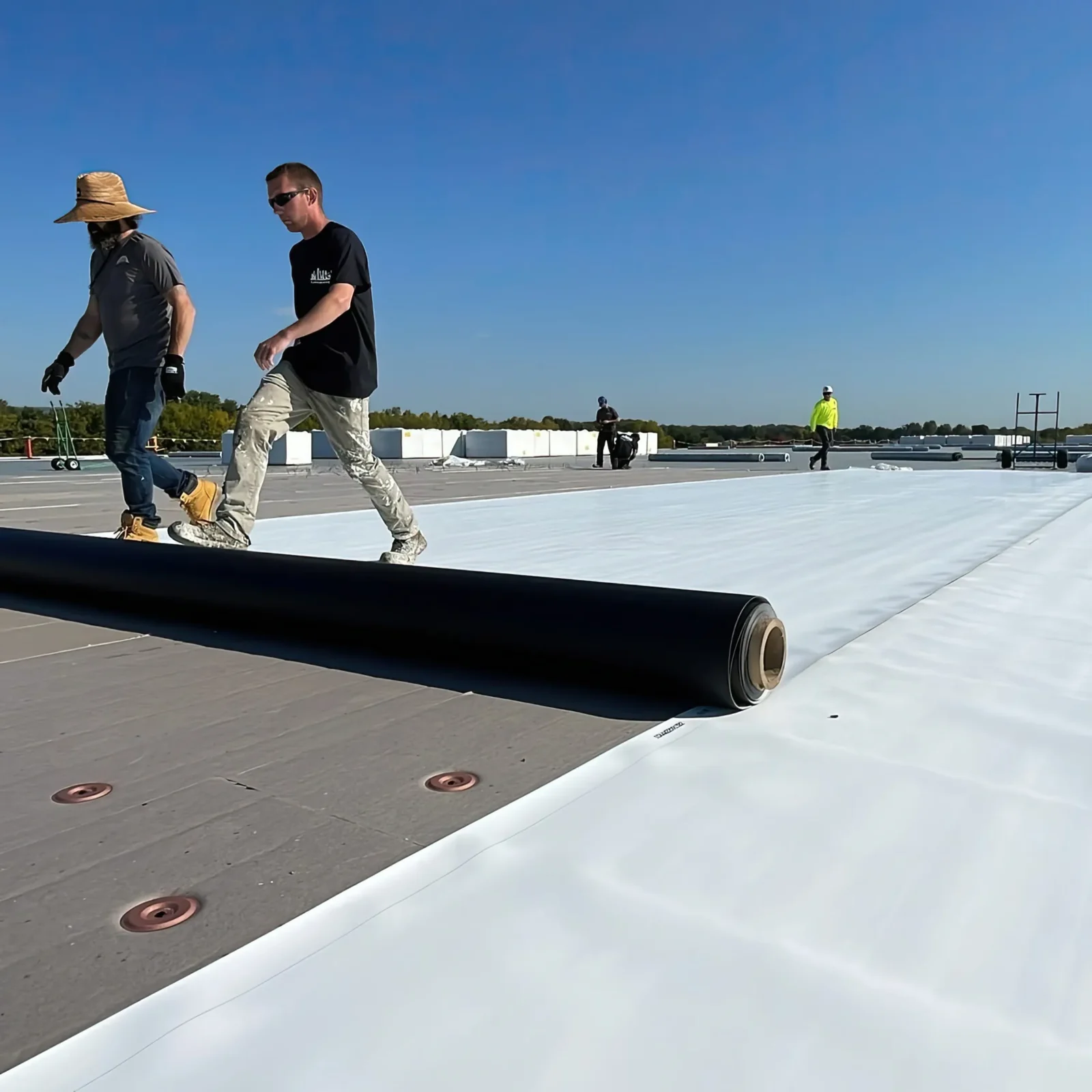
TPO (thermoplastic polyolefin) is the best flat roof material for California homes and commercial buildings. It reflects up to 80% of sunlight, lasts 20–30 years, and costs $5.50–$8.00 per square foot installed — making it 30–50% cheaper than PVC while outperforming torch-down (modified bitumen) in durability, energy savings, and seam strength. Here’s why we recommend TPO for every flat roof project in Long Beach and the South Bay.
TPO vs Torch-Down: Head-to-Head Comparison
| Feature | TPO | Torch Down |
|---|---|---|
| Lifespan | 20–30 years | 10–15 years |
| Cost (installed) | $5.50–$8.00/sq ft | $4.00–$7.00/sq ft |
| Heat Reflection | Up to 80% | ~20% |
| Seam Method | Hot-air welded (fused) | Torch-applied adhesive |
| Fire Safety | No open flame | Requires open torch |
| UV Resistance | Excellent | Moderate (cracks over time) |
| Environmental Impact | Recyclable, no asphalt | Asphalt-based, harder to recycle |
5 Reasons TPO Beats Torch-Down for Flat Roofs
1. Energy Efficient
White TPO membrane reflects up to 80% of sunlight. In Southern California’s climate, this can reduce cooling costs by 10–30%. Torch-down roofs absorb heat, turning your building into an oven during summer months.
2. Stronger Seams
TPO seams are hot-air welded — the material fuses into one continuous piece, stronger than the membrane itself. Torch-down seams rely on adhesive that breaks down under UV exposure and thermal cycling, making them the most common failure point.
3. Lightweight and Flexible
TPO weighs significantly less than multi-layer torch-down systems. This reduces stress on your building’s structure and makes installation faster, which means lower labor costs.
4. Superior UV and Chemical Resistance
TPO resists UV radiation, ozone, mold, and chemical exposure — all common in Los Angeles air. Torch-down bitumen cracks and splits under the same conditions, especially after 10+ years in direct sun.
5. Safe Installation and Eco-Friendly
No open flame required — TPO is welded with hot air, eliminating fire risk during installation. It’s also recyclable and free of asphalt oils, making it the more environmentally responsible choice.
When to Replace a Flat Roof with TPO
Warning Signs Your Flat Roof Needs Replacement
- Ponding water: Water sits on the surface for 48+ hours after rain
- Blistering or bubbling: Air pockets forming in the membrane surface
- Cracked seams: Visible separation where membrane sections meet
- Interior leaks: Water stains on ceilings below the flat roof section
- Age: Torch-down roofs older than 12–15 years are typically past their effective lifespan
Frequently Asked Questions
How long does TPO roofing last in California?
TPO membranes last 20–30 years in California’s climate with proper installation and minimal maintenance. This is roughly double the lifespan of a standard torch-down flat roof, which typically fails at 10–15 years due to UV degradation and seam breakdown.
Is TPO or PVC better for flat roofs?
Both are single-ply membranes with similar lifespans. TPO costs 30–50% less than PVC and performs equally well in most residential and light commercial applications. PVC has an edge in restaurant or industrial settings where the roof is exposed to grease or chemical fumes. For most California homes, TPO is the smarter choice.
Can TPO be installed over an existing flat roof?
In some cases, yes — TPO can be installed as an overlay if the existing roof has only one layer, no moisture damage, and a smooth surface. However, we often recommend a full tear-off for best long-term results. We assess every roof individually and provide an honest recommendation during the free inspection.
Related Roofing Services
Move from this article into the right service path without losing the context behind your roofing decision.
Residential roofing
Installation and replacement paths for shingle, tile, concrete tile, and metal roofs.
Repair and maintenance
Inspection, leak repair, maintenance, and repair planning when the roof still has useful life.
Commercial and HOA
Commercial replacement, HOA planning, TPO systems, and silicone roof coating options.
Planning and proof
Start with the right service path, then review certifications, projects, and customer proof.
Service Areas
Golem Roofing serves Long Beach, the South Bay, Palos Verdes, and nearby Los Angeles County communities.
More Roofing Guides
Related articles selected from the same roofing topic cluster.
- Apartment Building Rock Roof Restoration in Long Beach, CA: 8 Tons of Gravel Removed and a 20-Year ASC Warranty
- Long Beach Roofing Cost Guide 2026 — Replacement, Repair & HIRGP Grant
- Long Beach Roof Replacement for a Two-Story Home and Garage: A Complete GAF System
- 13,000 SF HOA Roof Restoration in Signal Hill, CA: Silicone System, 20-Year Warranty & Third-Party Protection
- Complete Roof Replacement with GAF Timberline HDZ: From Layered Shingles to a 50-Year System
- Flat Roof Restoration in Long Beach, CA: Silicone Coating, Cost Savings & Warranty Protection
Ready to upgrade your flat roof to TPO?
Free inspection and quote for flat roof replacement. We serve all of LA and Orange County — from Long Beach to Redondo Beach and everywhere in between.
Get a Free Quote