
A tile roof valley carries runoff from two adjoining slopes. When tiles crowd the channel and debris collects between them, water can back up and leak even when the roofing components are otherwise intact. A repair proposal needs to address that drainage path as well as any damaged metal or underlayment.
A ceiling stain near a valley is a reason to investigate, not proof that the valley caused the leak. The roofer may need to examine the roof and its details before defining the repair. A proposal should distinguish an observed condition from a suspected water path and explain anything that cannot be assessed until tiles are lifted.
The parts beneath a tile roof valley
A valley is where two roof planes meet. On a tile roof, the visible tiles, valley metal, underlayment beneath them, and transitions to adjacent areas work together. The Tile Roofing Industry Alliance installation manual illustrates these components as coordinated details. The applicable manufacturer and project details matter for the roof being repaired.
Keep the valley channel open
In the obstructed example below, tiles crowd the valley and leaves and debris collect along it. That restriction can cause a leak even if the metal and underlayment are otherwise intact. Inspecting the drainage path is part of finding the cause; replacing a damaged tile alone may leave the obstruction in place.
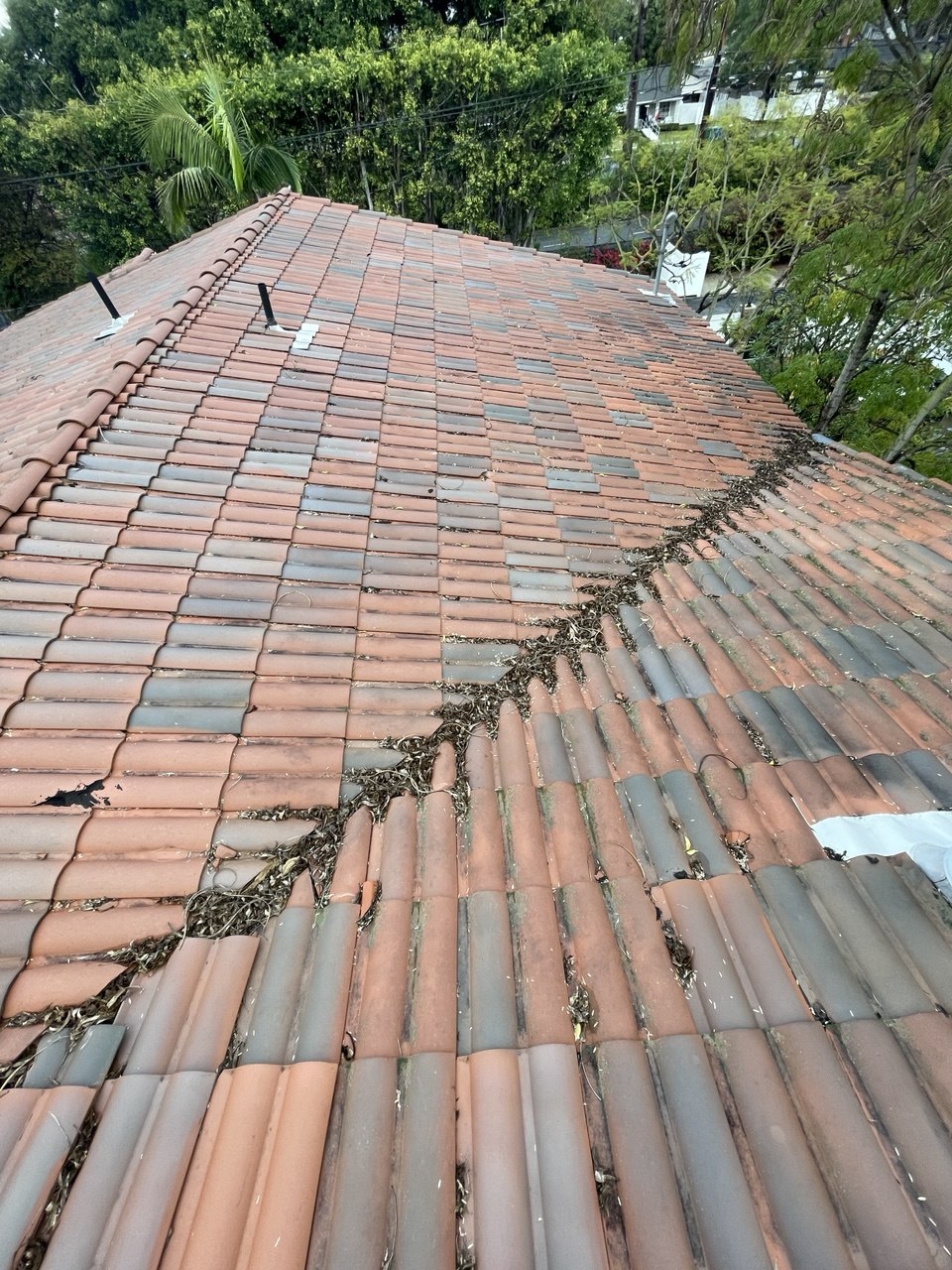
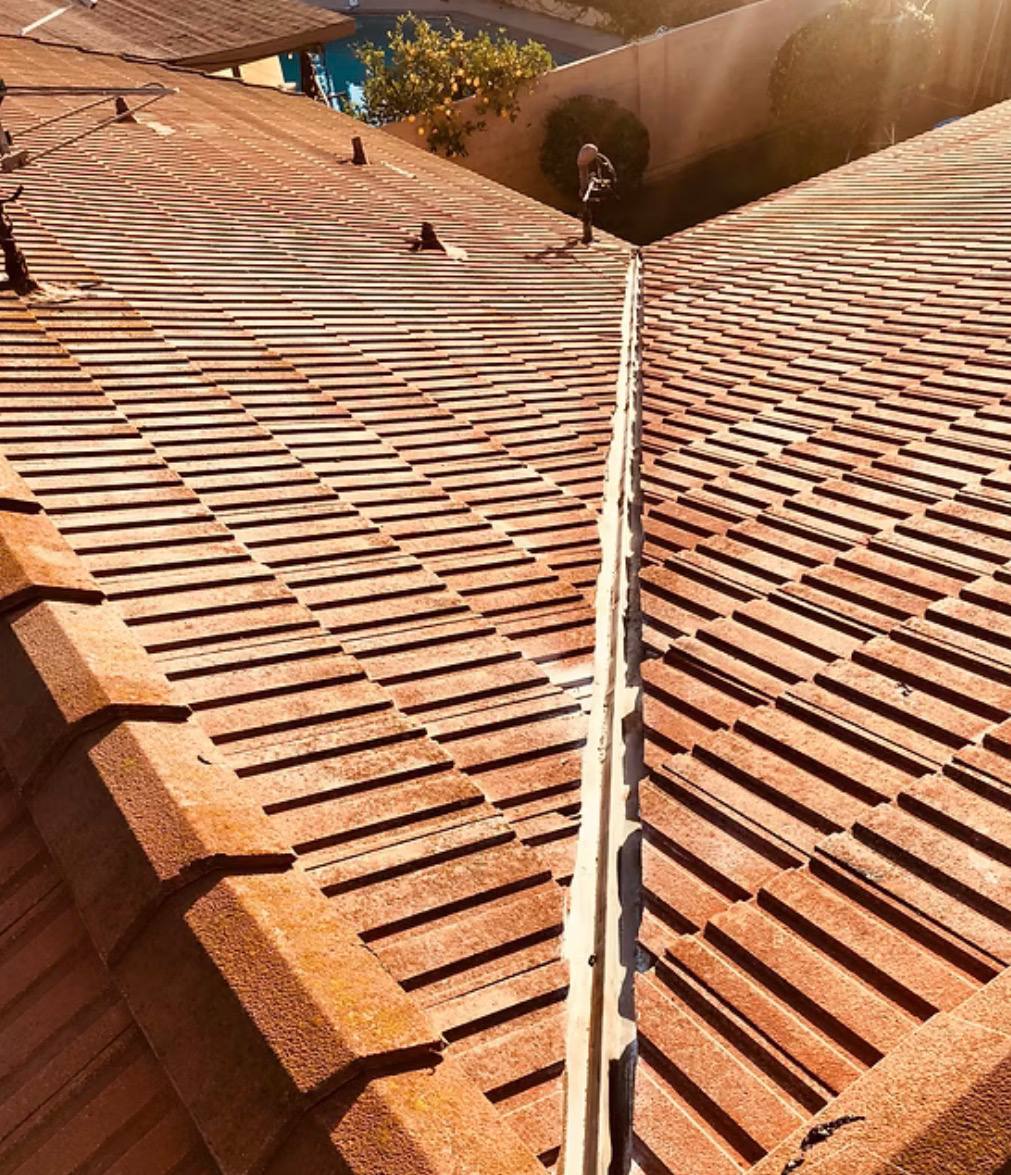
Golem Roofing calls for roughly 3–4 inches of clear drainage channel in this open-valley detail to keep runoff moving. The applicable tile manufacturer’s installation detail governs the final layout for each roof. The second example shows the channel exposed rather than crowded by tile.
Compare the work included in the proposal
A defined valley repair identifies its location and extent: for example, which section of the valley is included and how far the roofer expects to work into the adjoining tile. It should also say whether the proposal addresses debris, valley metal, underlayment, tiles, or a combination. Clearing accumulated debris is a different scope from opening the assembly to address damaged components; the visible symptom alone does not establish which is sufficient.
Where tiles need to be lifted, look for an explanation of which tiles will be removed and reset, how cut tiles at the valley are handled, and what happens if some cannot be reused. A matching replacement may be limited by the existing tile’s profile, color and availability. The proposal can explain the intended match and how an acceptable alternative would be agreed if an exact match is unavailable.
The transition at the edge of the repair matters. New material has to connect to the existing roof in a way appropriate to that assembly. A proposal that stops at an arbitrary line without addressing the adjoining underlayment or tile leaves a question about that connection. The roofer may not know the full extent until opening the area, but can still describe the initial boundary and the conditions that would lead to a revised scope.
When the boundary changes
If the roofer finds damaged underlayment beyond the proposed valley repair, ask how far the repair must extend to connect to sound surrounding material. Review the added area and cost before approving the change.
Conversely, a localized condition does not by itself establish that the entire tile roof needs to be reset or replaced. If a broader recommendation is made, the evidence should explain why the condition extends beyond the valley and what the broader work includes. Tile roof replacement is a separate decision from a defined repair.
Ask for photos of the opened valley and repaired layers before the tiles are reset. Keep the labelled photos with the repair scope. Once the tiles are back, those records let you see what the roofer repaired and where the new work connects to the existing roof.
For a valley concern, arrange a roof inspection and written report or discuss the proposed tile roof repair with Golem Roofing. Share the location of the stain and any prior repair information so the scope can address the observed problem.
Related Roofing Services
Move from this article into the right service path without losing the context behind your roofing decision.
Residential roofing
Installation and replacement paths for shingle, tile, concrete tile, and metal roofs.
Repair and maintenance
Inspection, leak repair, maintenance, and repair planning when the roof still has useful life.
Commercial and HOA
Commercial replacement, HOA planning, TPO systems, and silicone roof coating options.
Planning and proof
Start with the right service path, then review certifications, projects, and customer proof.
Service Areas
Golem Roofing serves Long Beach, the South Bay, Palos Verdes, and nearby Los Angeles County communities.
More Roofing Guides
Related articles selected from the same roofing topic cluster.
- Roof Drip Edge, Gutters and Fascia: Fix the Right Part
- Roof Warranty Protection That Holds Up: What Homeowners Should Look For
- Long Beach Roof Replacement for a Two-Story Home and Garage: A Complete GAF System
- Apartment Building Rock Roof Restoration in Long Beach, CA: 8 Tons of Gravel Removed and a 20-Year ASC Warranty
- 13,000 SF HOA Roof Restoration in Signal Hill, CA: Silicone System, 20-Year Warranty & Third-Party Protection
- Complete Roof Replacement with GAF Timberline HDZ: From Layered Shingles to a 50-Year System